


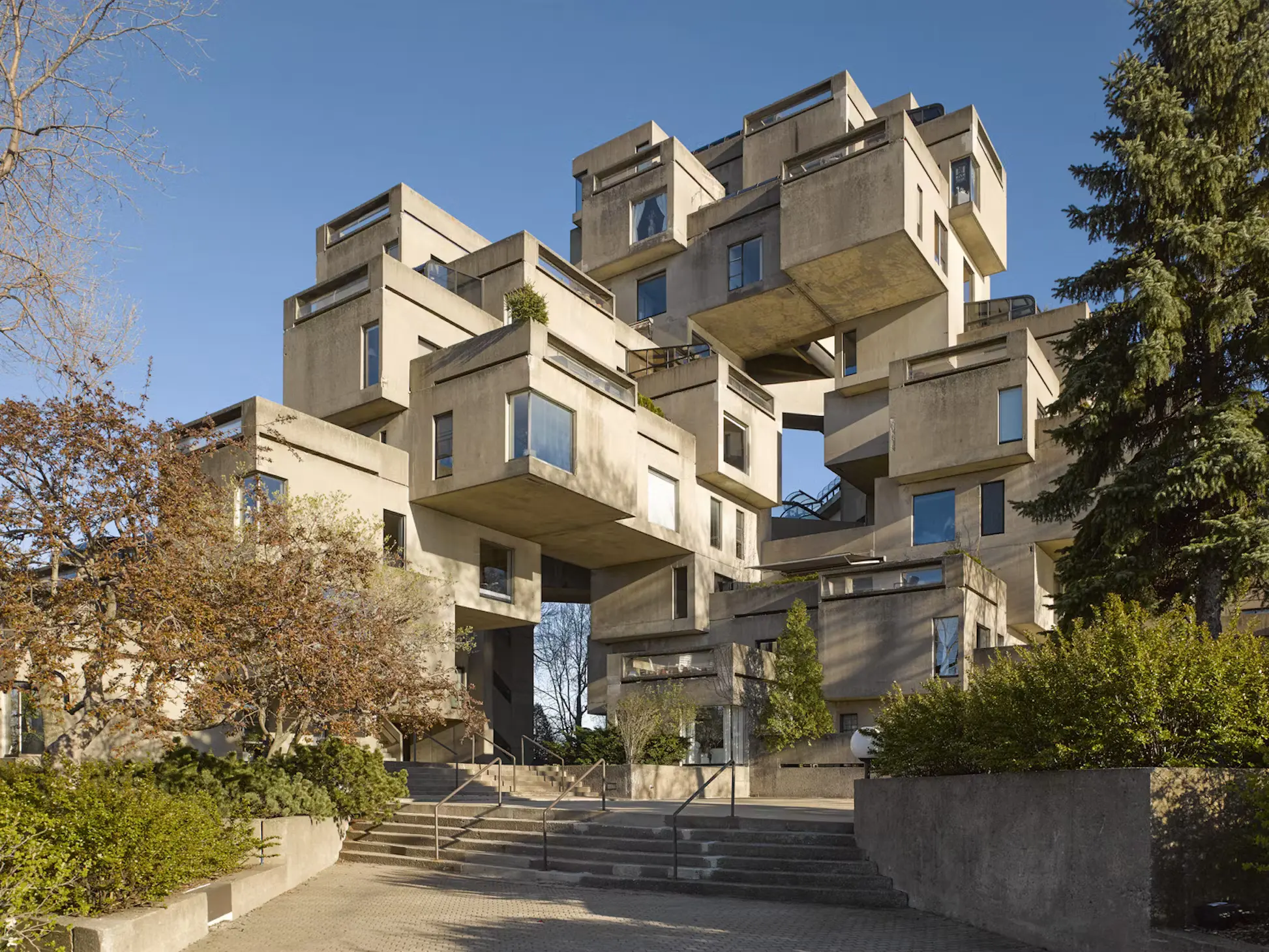
FEW ARCHITECTS launch with the splash Moshe Safdie did: Habitat 67, the now iconic housing development showcased at Montreal’s world’s fair, grew out of his master’s thesis. In the half-century since that first project, Safdie has proven to be a versatile and prolific architect. The National Gallery of Canada in Ottawa, Marina Bay Sands in Singapore, and the Khalsa Heritage Centre in Anandpur Sahib, India, all demonstrate the breadth of his abilities. We sat down this summer to discuss his many projects in Israel, Jewish aesthetics, and the importance of light in architecture.
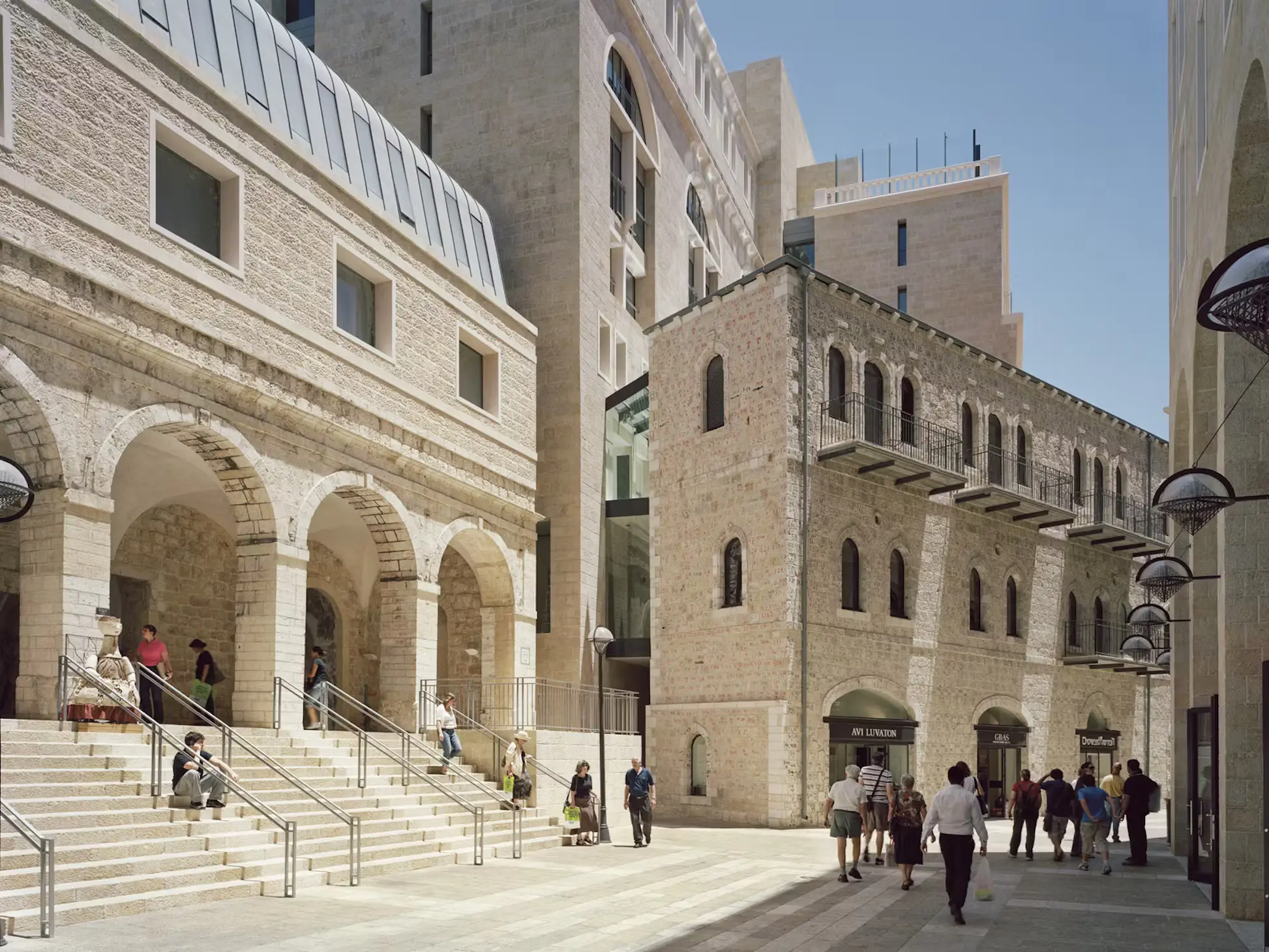
We are living in a very polarized time. You have written about the Mamilla district in Jerusalem, which you planned in the early 1970s as a physical, constructed manifestation of an open society. It took over 40 years for it to be fully realized as a shopping district and bridge between the old and new cities, and Jewish and Palestinian areas. Can architects still play a role in mending a broken society?
I think it’s important to distinguish between what architects can do, which is physical, and between what statesmen and politicians can do, which is create policy. Architects can create the physical setting to improve cohabitation, collaboration, interaction: they can have extraordinary impact as they design the public realm and how it relates to the urban fabric. But that can only be done via an opportunity that has to be enacted one way or the other by policy.
But, if there is policy in place, the architect can create the physical setting. To do that, they need to not just be a strong physical designer of the public realm, but to have their antennae out to appreciate various kinds of forces: how people move in a city, when do they feel secure and insecure in a city, how you can mix certain uses. Cohabitation by different populations in residential neighbourhoods is very difficult, more difficult than commingling in, say, the bazaar, in the marketplace.
Right now, I’m working in Singapore, which has an interesting mix of minorities: the majority are Chinese, but there are also Indian, Tamil, and Malay communities. The government, by design — and that’s policy plus architecture — has every one of the new towns mixed racially, because they had race riots in the early years of the state, and they were determined never to let that happen again. They are socially engineering the population in housing projects. You can go far with that. The architect is a player, but not the sole player.
Do you think that Mamilla actually fulfilled its function?
I think Mamilla is a major success in three ways. First, it created a powerful link between the Old City and the new city. Before it was done, all the land that was cleared around the walls was kind of a no man’s land in terms of urban activity, and it created this very powerful bridge which is full of life almost all the time. Because of its position between different communities, it also, by definition, attracts all the people. So Mamilla, when you walk around, there’s a lot of Orthodox, some haredi, the secular Jerusalemites, there’s tourists, there’s Arabs — and those who are visibly Arabs, walking around freely with the dress and head covers, etc. There are a significant number of Arabs serving and buying in the shops. So it is really a place where the public realm is mixed and cohabitated, and it gives it a certain richness. It also created a flow between the Old City, between Jaffa Gate and the new city: on the chagim you get people going to prayers at the wall, during Ramadan you get a flow of people coming from Sheikh Jarrah. So it’s a mixer.
In The Body of Faith, Jewish theologian and philosopher Michael Wyschogrod wrote about the Jewish community that “the level of taste in the Jewish community — and not only in the Orthodox community — is very low. Families that could afford the best live in homes decorated in the most pedestrian taste, lacking all individuality and personal statement. And when an attempt is made to express some individuality, more often than not the result is merely weird rather than in good taste.” He went on to say that it’s a “very dangerous development, not mainly because our synagogues and homes exhibit poor taste, but because a totally bourgeois Judaism will be a dead Judaism.… A bourgeois Judaism is dead because it is out of contact with the explosive ferment of the religious spirit.” Does that resonate? Why have there been so few great synagogues built in the past half-century or so?
It does resonate, very much so.
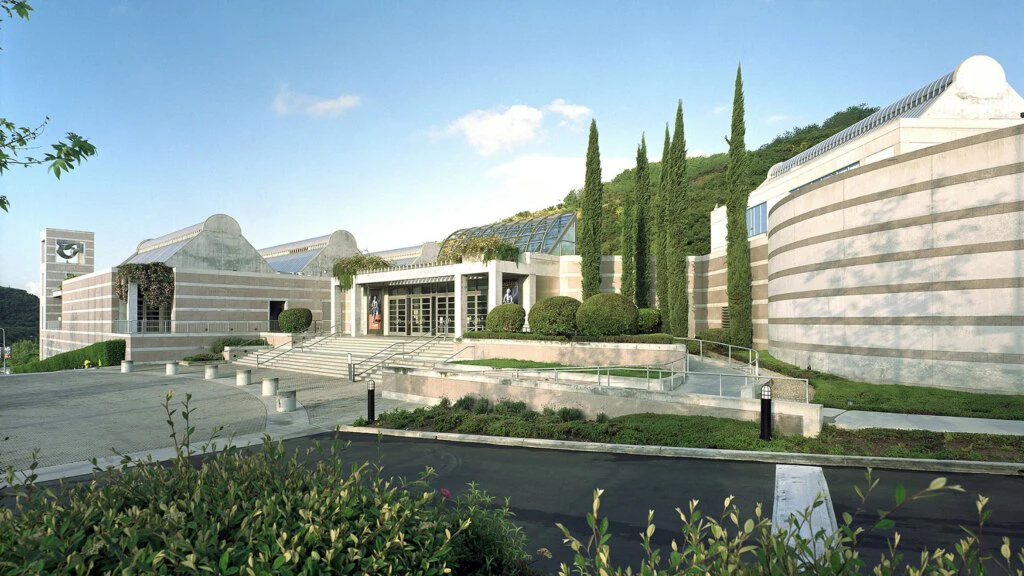
Erich Mendelsohn did a couple of synagogues in America. Not great, but pretty good. I have an office of 80 people, maybe 20 percent are Jews. And when we get a Jewish institution in here, there’s always that sense of skepticism. Can we transcend the taste level? With exceptions — the Skirball Center, in Los Angeles, is an exemplary exception — it remains true.
I think in the haredi and religious community, it’s most extreme. And the sadness for me is it’s not just the aesthetics of building a synagogue; it’s also the way space is used. I did a building for Rav Goren [a former chief rabbi of Israel] called the Idra. It abuts the Western Wall piazza: an old building, quite beautiful, that I restored. And within years, they built a horrible cover on the terrace with an awful makeshift roof. Because they want to have events there, they built fences on the upper roof —the ugliest fences, it looks like a prison and has lights that look like prison lights. I have my house next door looking down on it, and I said with disbelief that they were doing everything you could do to destroy how that building appears in the city and how it contributes to what’s around it. It is disastrous. And that’s true down the line.
You go around the Jewish Quarter, which started with some good guidelines and so on, and people keep adding things: terraces, this and that, pergolas — but with no control, and there’s no will. There’s no will of the authorities, the city, or the Hevra Leshikum Ha’rova [the organization overseeing the development of the Old City in Jerusalem] to control it. There is no judgment of the people themselves who are doing all these improvisations. Some people would go further and say it’s because of the Jewish tradition of lo tase lecha pesel umesichah [the prohibition against graven images], that the desire to avoid representational art gets extended to include all sorts of beautification. But I don’t buy that because, in history, it’s true that we were always impacted by local culture, but that’s inevitable. But there were buildings that people took pride in and care of.
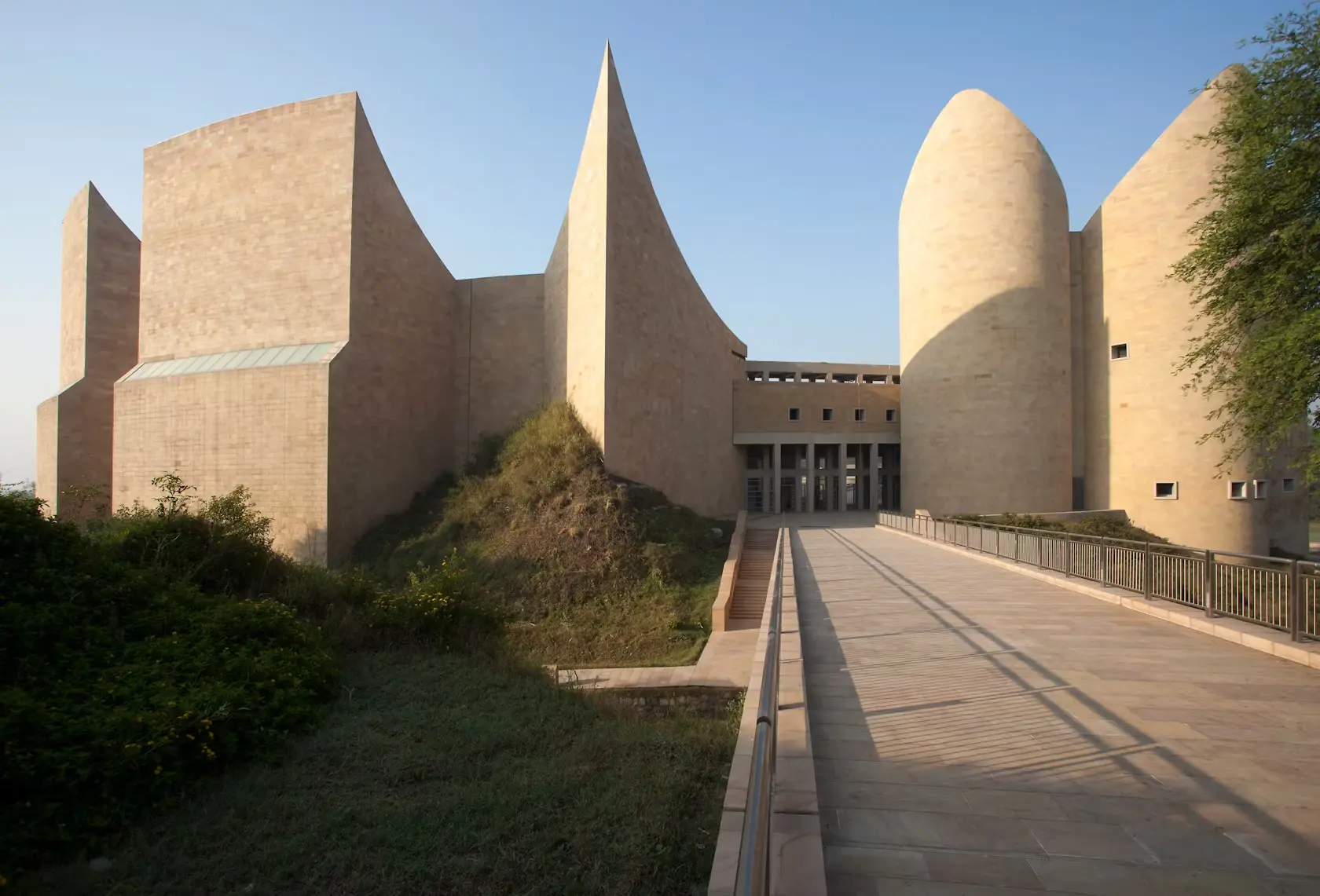
I did the national museum of the Sikhs in India. And I’d say India is not a great place for maintenance, generally speaking, but I did it 20 years ago and it is absolutely impeccable because there is this pride. It’s deeper than just aesthetic taste. It’s the culture of caring for the environment.

If you had an opportunity to talk to people who don’t think about architecture or design in this way, how might you get them to begin to appreciate it?
When I look at the curriculum in Israel — I have grandchildren now of school age, kindergarten age, my one grandson is going to Grade 2 — it’s a pleasure to see what they do in the arts: drawing, observing, having trips to look at nature. I lament the fact that schools in Israel have less and less of that. And I think it’s a very important thing to try and introduce it in the Jewish school curriculum. And I know, people always say Jews are not much in the visual arts. But you come to the United States and how many important architects are Jewish? Frank Gehry, Richard Meier, I can go on and on. And the same is true in the world of art — Rothko and others, there’s a good list. So I’d say that when the opportunity and the education and the exposure are there, there’s no lack of talent and appreciation.
Moving from the haredi to the hiloni side, have you ever thought of the Habitat 67 housing complex as an urban kibbutz?
Y eah, I think in many ways when I designed it, the kind of collective life of the kibbutz was there. I mean, there wasn’t the common dining room and the children’s house, but there was that sense of collective living. And in fact, what’s interesting is that Habitat, now 60 years later, is very much a communal place. They have a residence committee, they have subcommittees, they have a cookbook that they did, and they have newsletters and internal politics and I’m very involved because, until recently, I owned an apartment so I would get all the stuff. So it is very much a communal place.
Could you walk me through the process of completing a project? How do you balance the site, the program, the client — and how do they all inform what the ultimate design is?
A project is the outcome of a dialogue with a client. No great building can occur without a great client. Clients have real impact on the outcome because it’s part of the dialogue. Good architecture comes out of that dialogue. Sometimes it involves educating the client, and sometimes you learn from the client. It’s a dynamic thing.
For me, understanding the site with all its subtleties beginning from climate, topography, the surrounding culture, the lifestyle of the community — all these things are important. I gave a lecture series at the Harvard Graduate School of Design this semester on the theme of belonging: How do you make a building belong? And belonging is not in the eyes of the architect; it’s in the eyes of the user. If you want to achieve a sense of belonging, you’ve got to have it emerge in the user. If you do a school, I don’t care about the shapes and sculptural qualities. What matters is: Is it a wonderful place for learning? Is the classroom an inspiring place? Is it the place where community evolves? These are the ingredients. Then there’s economics and reality and building codes and you are orchestrating and floating between them all.

What do you think are the elements of great synagogue architecture given the specific needs of any given synagogue, such as an ark or bimah?
I was recently in Paris and I went to see Notre-Dame, which has been refurbished and rebuilt. And for the first time we’re seeing it with all the walls as they were a thousand years ago. They’ve been washed and cleaned. You see the stone, beautiful lighting. What makes that place extraordinary? It’s light, the quality of light. It is the resonance between the form and the structural system, the sort of soaring up, soaring structure, the way everything sort of meets, columns become pilasters become flying buttresses. There’s a world of ornament, which is an outcome of the crafting of the building. In the case of the church, there’s another layer of art, stained glass windows, the sculpture and all that play a role.
Now a synagogue is minus the art, minus the sculpture, but not minus the colour necessarily; there is the structure itself and there is the light. The synagogue first of all is a matter of light — light of all kinds. There are so many different qualities of light. Light is an element by which we can have that sense of spiritual uplift.
In the case of the synagogue, it also has to do with a sense of the communal. The bimah is an important centre, and then there’s the aron hakodesh, another important centre, and the ritual path between them. And then the way people sit in the synagogue looking at each other with the heights, the levels. It’s very hard to give a prescription.
I’ve noticed that ever since writing your memoir (If Walls Could Speak: My Life in Architecture, published in 2022), you’ve done a lot of interviews. What have you learned about yourself in the process?
I think the nice thing about being almost 87 is that you reach a certain level of security and self-appreciation about what you’ve achieved that allows you to look at things much more openly and in an appreciative way. I’d say that, 20 years ago, I would be more critical of things. There is a mellowing.




